


The state-capital nexus in fragile contexts: A case study of tax relations in Somalia
Dr Gayatri Sahgal
10 April 2026
stock.adobe.com / Susanne
Does capitalism need the state?
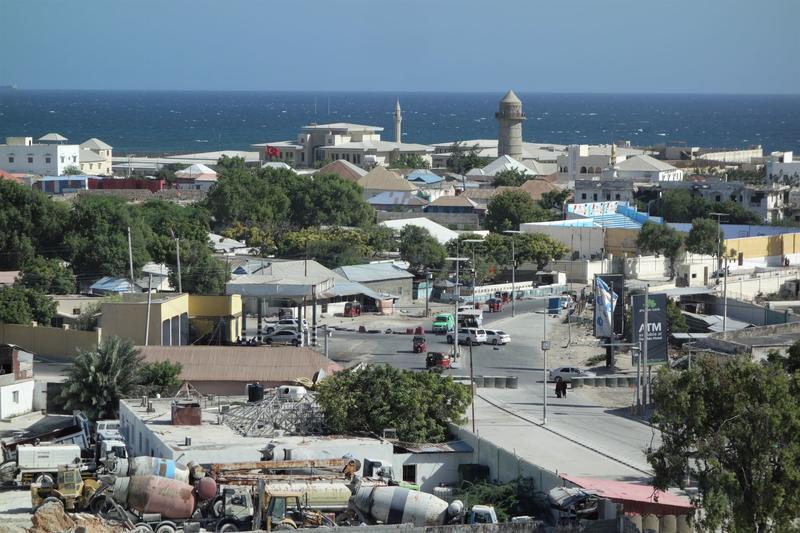
At first glance, the Somali experience might suggest otherwise. After the collapse of the Somali state in 1991, many parts of the economy continued to operate. In fact, some sectors—such as telecommunications, money transfers, and banking—not only survived but thrived, despite the absence of a strong central government to regulate them.
This raises an important question: if business can grow without a formal state, how important is the state for capitalist development?
Within development studies, scholars have long debated the appropriate role of the state in the economy. While there are important disagreements, even more liberal scholars recognise that the state plays a key role in creating the conditions for capitalist markets to function. Yet these debates rarely focus on African contexts—and even more rarely on countries described as “fragile” or “weak.”
Part of the problem lies in how capitalism in Africa has been understood. Conventional accounts often define capitalism narrowly: as the separation of producers from the means of production, the dominance of wage labour, and production geared towards market exchange. Because large segments of African labour forces remain tied to land-based livelihoods and informal economies, many countries are seen as only partially capitalist—or even outside global circuits of accumulation. This bias is even more pronounced in fragile contexts, which are often portrayed as spaces of a “total vacuum of authority,” with little scope for meaningful economic activity. As a result, we know relatively little about how state–capitalist dynamics actually operate in such settings.
Africanist scholars have long challenged this view, and two broad strands of research offer a way forward. The first calls for closer attention to the specific forms capitalism takes on the continent. From this perspective, capitalism has not unfolded uniformly across the world. Instead, it should be understood through concrete modes of accumulation—for example, the exploitation of labour, the concentration of power among economic and political elites, and deeply unequal distributions of wealth. Even where “classic” capitalist features—such as widespread wage labour—are less prominent, processes of investment and surplus extraction are clearly underway. Analysing these processes is therefore essential for understanding African economies.
A second strand suggests that formal state institutions may be less central to these processes than often assumed. Scholars studying contexts of instability and weak regulation highlight the role of informal institutions, social networks, and negotiated authority in enabling markets to function. Even in the absence of strong formal structures, economic activity is still organised and governed. In this sense, a “stateless” economy is never entirely unregulated.
In a recent article on the state–capital nexus in fragile contexts, I bring these two perspectives together. I argue that while capital does not always depend on formal state institutions, the state nonetheless retains both material and symbolic resources that can become indispensable to accumulation.
I draw on the Somali case and argue that, although the early expansion of its private sector seemed to confirm that capital could flourish without the state, this was not the case. As sectors such as telecommunications grew larger and became more integrated into global markets, new challenges emerged. Firms increasingly required services and guarantees that only a state could credibly provide: formal licensing frameworks, regulatory standardisation, and representation in international forums. They also faced growing pressure from external partners to demonstrate compliance with recognised regulatory standards.
When the Federal Government of Somalia was established in 2012, it had limited fiscal and administrative capacity. Yet it possessed something the private sector could not generate on its own: sovereign authority and international recognition. In negotiations over taxation, telecommunications firms began to accept formal tax arrangements in exchange for specific returns that formal state institutions could provide.
These agreements were cautious and contested. Alignment between firms and the state remained partial, and trust was fragile. Nonetheless, they illustrate a broader point: even where capital initially develops outside formal institutions, it may eventually require the state to secure market-making functions and external legitimacy.
The Somali case, therefore, challenges two common assumptions. First, it unsettles the idea that fragile contexts are economic voids. Capitalist accumulation can and does occur in the absence of formal state institutions. Second, it complicates the notion that capitalism can operate for long without the state. More broadly, it highlights the importance of examining the specific processes through which relationships between state and capital emerge. Doing so offers a more nuanced understanding of how growth coalitions may form—and why they sometimes remain fragile. It also underscores the continuing material and symbolic importance of the state in shaping capitalist development in African contexts.
Author bio
Gayatri Sahgal is a Researcher at the Chr. Michelsen Institute in Bergen, Norway. Her research interests lie at the intersection of state-building, governance, taxation and political economy of development in fragile and conflict-affected contexts. Gayatri completed her PhD at the University of Oxford (2023) and her Post-doctorate at the University of Pennsylvania (2025).