

Can Africa turn critical minerals into green industrialisation?
Leezola Zongwe and Francesca Manyonyi
17 July 2026
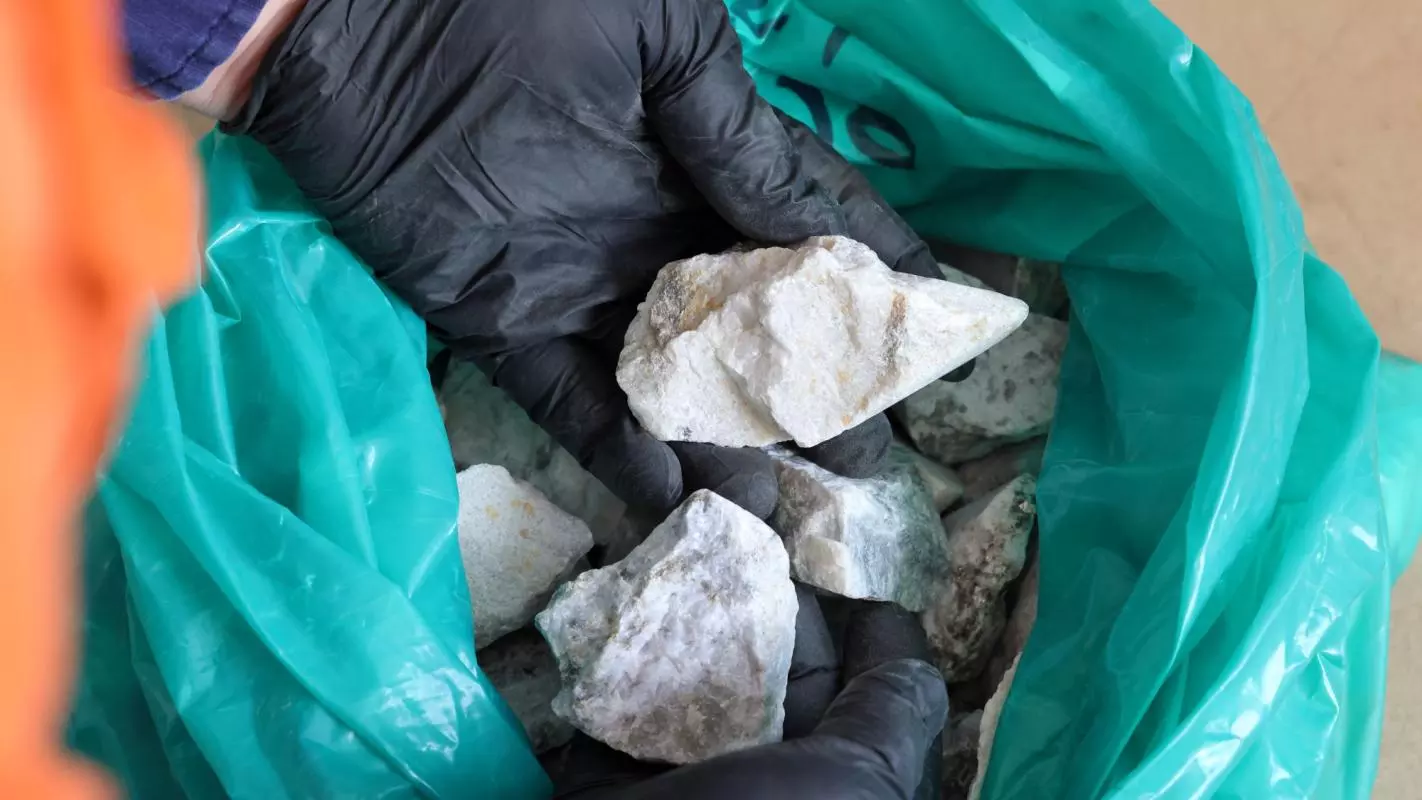
Credit: BJP7images, stock.adobe.com
Africa's critical minerals are often described as the fuel of the global green transition. But if African countries don't act strategically, the continent risks repeating a familiar pattern of exporting raw resources and missing out on opportunities such as job creation that come with mineral wealth.
With its vast reserves of minerals that are vital to renewable-energy and clean-technology infrastructure, Africa stands at a pivotal juncture. These materials are described as "critical" because of their economic and strategic importance and the risks associated with disruption to their supply. Many are also indispensable to renewable-energy technologies, electric vehicles and electricity networks. Yet for decades, African countries have exercised limited control over these resources and captured only a fraction of their value.
Africa's critical minerals create a window for industrialisation, but only if African countries exercise agency collectively and move beyond extraction. The continent now has the chance to redefine its role in the critical minerals value chain. Managed well, this transition-often described as a new industrial revolution-could create jobs, develop technical skills and expand economic prospects for Africa's rapidly growing youth population.
A scramble for critical minerals
China's influence in Africa's critical-minerals economy derives from both its long-term investments in mining and transport infrastructure and its dominant position in global mineral processing. Based on 2022 data, Chinese companies accounted for more than two-thirds of global lithium and cobalt processing capacity. China also accounts for approximately 95 per cent of global battery-grade manganese sulphate production, a key input in several battery technologies.
In Africa, this global industrial position is reinforced by substantial investments in extractive and logistical networks. China financed and supported the construction of the Tanzania-Zambia Railway, commonly known as TAZARA, between 1970 and 1976, connecting Zambia's mineral-producing regions with the port of Dar es Salaam. Under a concession agreement signed in September 2025, the China Civil Engineering Construction Corporation is leading a revitalisation programme involving US$1.4 billion in railway rehabilitation and new rolling stock. By increasing freight capacity and improving access to regional and international markets, the upgraded railway is likely to strengthen China's wider role in the transport and commercial networks serving the mineral economies of Central and Southern Africa.
The United States has long had an interest in African critical minerals, while other Western governments have also increased their engagement. The European Union's Critical Raw Materials Act, which entered into force in May 2024, forms part of its efforts to secure and diversify critical-mineral supply chains. The Lobito Corridor, connecting Angola, the DRC and Zambia, has attracted multi-billion-dollar commitments from the United States, the European Union, the African Development Bank and other development partners.
African countries, as the holders of critical mineral resources, increasingly seek to move beyond extraction and establish themselves as centres for mineral processing and manufacturing. The opportunities for value addition through industrialisation, as well as the growing need for e-mobility technology on the continent itself, mean African countries' decisions in the coming years will shape and define growth and development on the continent.
Africa cannot remain a supplier of raw materials
A typical electric car requires several times more mineral inputs than a conventional car, although the precise quantity varies according to the vehicle's size and battery chemistry. As a result, global demand for these materials is growing rapidly. Africa's total battery demand is projected to reach approximately 7 gigawatt-hours by 2030, with stationary energy storage accounting for around 60 per cent and electric mobility contributing much of the remainder. The spread of electric buses and motorcycles, particularly in East Africa, illustrates the rapid growth of the continent's EV market.
African countries have the capability to move further up the critical minerals value chain and position themselves as producers and suppliers of the technology that will be key to their own green transition and economic development. This opportunity could also lead to more affordable access to EVs on the continent.
Mineral processing and battery manufacturing could be significantly more cost-competitive in parts of Africa than in established industrial hubs elsewhere. For instance, building a battery precursor plant in the DRC would cost one-third as much as building a comparable plant in the US. The World Bank estimates that producing US$500 million worth of copper-based products annually could generate US$112 million in additional exports and create between 1,300 and 2,000 additional employment opportunities.
Significant obstacles remain. Africa faces shortages of specialised skills in hydrometallurgy, battery chemistry and advanced materials processing. Technology-transfer restrictions imposed by major industrial powers, alongside weak regional supply chains for key industrial chemicals, further constrain local beneficiation efforts.
Addressing these challenges will require sustained investment in technical education, research institutions, innovation hubs and industrial finance. Building local technological capabilities is likely to prove as important as attracting foreign investment.
Turning mineral wealth into industrial development
Africa's success will depend on its ability to shift from extractivism towards industrialisation. In recent years, several African countries have restricted exports of mineral concentrates and unprocessed ores-including lithium, cobalt, manganese, graphite and rare-earth minerals-to encourage greater domestic processing. These measures are a first step towards retaining a greater share of the value generated by minerals mined within their borders. However, further action to direct investment towards local value chains remains necessary.
African governments must also prioritise transforming minerals into jobs. One estimate suggests that, if pursued at sufficient scale, mineral beneficiation could increase Africa's GDP by as much as 12 per cent while creating substantial industrial employment.
National agency alone is insufficient without regional integration. Cross-border collaboration will afford African countries the leverage to direct foreign investment in a manner that leads to greater local value retention. The African Union's African Green Minerals Strategy provides a continental framework for regional cooperation, value addition and the development of integrated mineral value chains.
Regional integration requires more harmonised regulatory frameworks and consistent environmental standards across the continent. It also requires cross-border renewable energy trade and hybrid energy supply systems to reduce mineral-processing plants' dependence on diesel. The African Continental Free Trade Area provides a framework through which greater regulatory harmonisation could be pursued. Additional blended finance models and joint ventures among countries will be key to harnessing the benefits of critical-mineral and EV value chains, and ensuring those benefits are felt by ordinary Africans across the continent.
The global race for critical minerals is already under way. The question is whether African countries will shape the terms on which that transition occurs. Without coordinated industrial policies and regional cooperation, the continent risks remaining primarily a supplier of raw materials to foreign manufacturers. With both, Africa could emerge not only as a source of critical minerals, but also as a centre of green industrialisation in its own right.
This article draws on the report The Geopolitics of Critical Minerals in Africa: Redefining the Continent's Role in the E-mobility Value Chain, written by Leezola Zongwe, Kasonde Chituta and Takudzwa Ndabvonga, and jointly commissioned by the Enzi Ijayo Africa Initiative and the African Future Policies Hub.