
Africa at an Inflection Point: U.S. Tariffs and WTO Stasis Call for Strategic Engagement Amid Uncertainty
Ese Stephen Owie, DPhil (Oxon)
1 May 2026
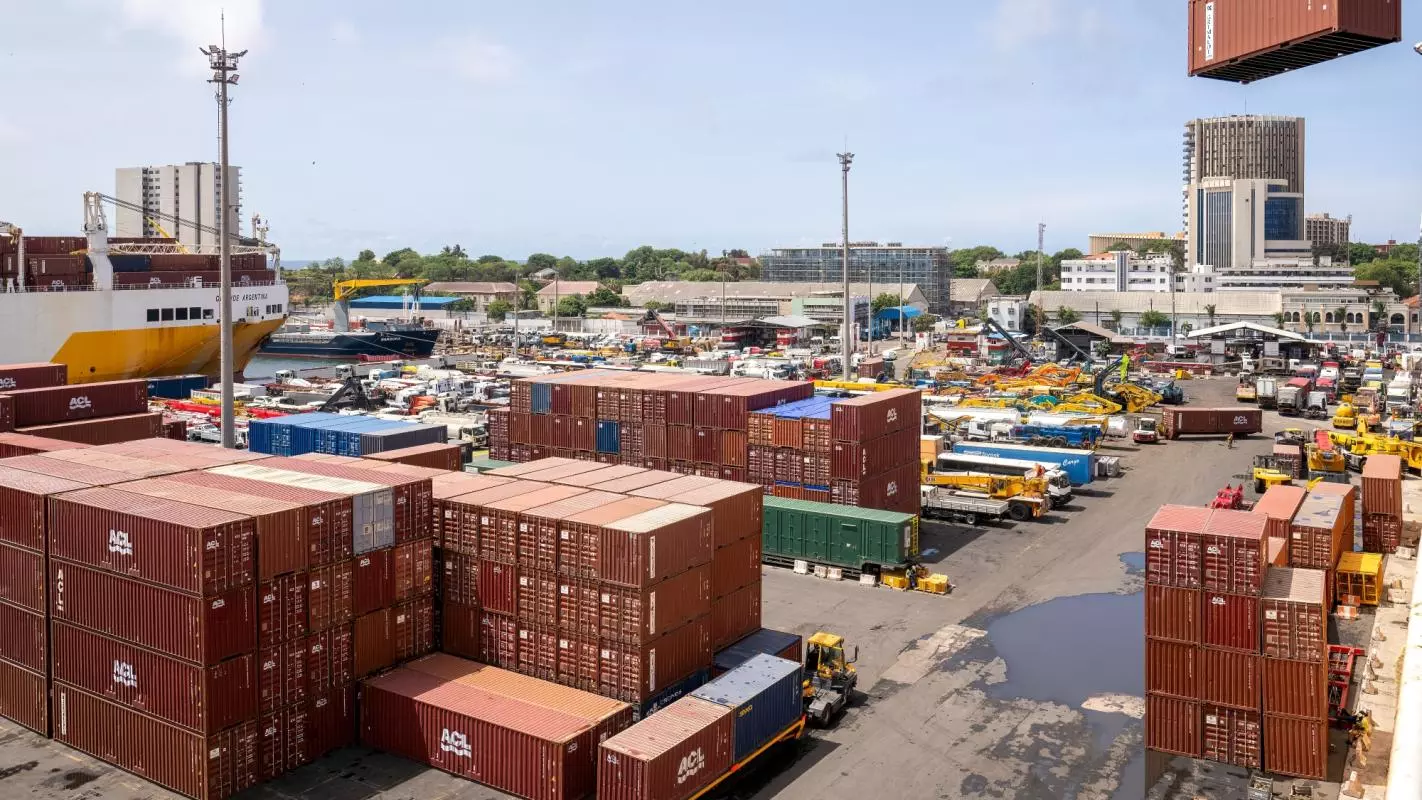
Credit: manola72 - stock.adobe.com
In Nairobi's export processing zones, a tariff decision made in Washington can quickly become a factory-floor problem. Garment orders are often agreed months in advance. Prices are fixed early. Margins are narrow. Workers, suppliers, and buyers depend on one thing: predictability.
That is why recent developments in global trade matter so much for Africa. They are not abstract legal or diplomatic events. They shape contracts, jobs, investment decisions, and household incomes.
The Changing Nature of Trade Policy
Three developments should concentrate minds across the continent.
First, on 3 February 2026, President Trump signed a one-year extension of the African Growth and Opportunity Act (AGOA), only until 31 December 2026, after having lapsed months earlier. For many exporters, this brought temporary relief, but also reinforced a deeper reality that access to key markets remains uncertain and politically contingent.
Second, on 20 February 2026, the United States Supreme Court ruled that the International Emergency Economic Powers Act does not authorise the President to impose broad tariffs, reaffirming limits on executive power but leaving intact other avenues for trade restrictions. Instruments such as national security tariffs and trade retaliation measures continue to shape global markets. Within days of the judgment, the Trump administration issued a temporary global surcharge under section 122 of the Trade Act of 1974.
Third, the Fourteenth WTO Ministerial Conference, held in Yaoundé from 26 to 30 March 2026, ended with limited outcomes and no final package on issues central to African economies, including food security and development flexibilities, indicating the multilateral system may not respond with sufficient coherence to reflect the continent's development priorities.
These developments also point to the deeper shift in how trade policy is now made. Across major economies, decisions are increasingly shaped by domestic politics, geopolitical rivalry, industrial strategy, security concerns, and climate regulation.
Taken together, there is a simple but uncomfortable truth: trade uncertainty is no longer an occasional inconvenience but a structural feature of the system.
For Africa, there is a new form of trade cost. Not only tariffs, but volatility itself.
Why Volatility Matters for Africa
Africa feels this volatility more acutely than many regions because much of its privileged access to major markets rests on preference rather than treaty, particularly tariff exemptions.
Tariffs are simple in theory but decisive in practice. They determine prices, shape contracts, and influence where firms invest.
In Kenya, AGOA supports tens of thousands of jobs in apparel and agribusiness, with estimates exceeding 60,000 workers in export processing zones. In South Africa, automotive exports to the United States, valued at over $2 billion, depend significantly on preferential access.
Preferential arrangements such as AGOA matter because they reduce tariffs to zero. But when those preferences are uncertain, even temporarily, exporters face a different kind of cost: risk.
Buyers adjust to this uncertainty by delaying orders, renegotiating prices, and demanding risk premiums. For sectors where competitiveness rests on a narrow margin between zero and 10 per cent, uncertainty itself becomes a cost.
This is visible in apparel, where global buyers can move sourcing decisions within weeks. It is also visible in automotive supply chains, where parts, assembly, and logistics depend on predictable rules. The same logic applies to high-value exports such as diamonds, agricultural goods, and processed products. In each case, volatility enters contracts long before it appears in official tariff schedules.
From Exposure to Strategy
With global trade rules becoming more contested and fragmented, the question is no longer whether Africa should engage, it is how to do so strategically within a system that is increasingly complex and less predictable.
Africa's response cannot be reactive. It must be deliberate and forward-looking.
First, the continent needs stronger capacity to anticipate shocks. Trade diplomacy now requires real-time analysis of developments in major markets, from tariff litigation to climate measures and regulatory investigations. This is as much about intelligence and scenario planning as it is about negotiation.
Second, the African Continental Free Trade Area (AfCFTA) must function as economic insurance. Intra-African trade remains below its potential, accounting for roughly 15 per cent of total African trade compared to significantly higher levels in other regions. Faster implementation, through customs digitisation, harmonised standards, and improved logistics, can reduce exposure to external shocks. The aim is not inward-looking protection, but greater resilience.
Third, compliance must become a competitive advantage. As global trade relies more on standards, documentation, and enforcement, firms that can adapt quickly will retain market access. This requires practical support for exporters, from classification guidance to digital systems and regulatory awareness.
Fourth, Africa should use the remaining AGOA window to seek a more stable framework with the United States. A predictable arrangement aligned with the scale of the AfCFTA would provide greater certainty than periodic renewal and last-minute extensions. AGOA and other bilateral engagements such as Trade and Investment Framework Agreements (TIFAs), bilateral investment treaties, and emerging sector-specific arrangements on critical minerals and clean energy supply chains also matter. The continent now needs to design preference models that are compatible with both the more fragmented and strategic trading order and the need to drive its socioeconomic transformation.
Fifth, Africa should advance more collective positions. Elsewhere, I have argued for Afri-multilateralism: a more coordinated African approach to multilateral and bilateral trade engagement that converts dispersed national positions into a stronger continental negotiating posture. By consolidating dispersed national engagements into a coordinated continental negotiating posture, this approach would enhance predictability, reduce exposure to unilateral policy shifts, and reduce the transmission of external trade shocks across African markets.
A Moment for Recalibration
The stakes are not abstract. They are measured in factory orders, export revenues, and livelihoods.
The global trading system is entering a phase where policy shifts are faster, more political, and less predictable. For Africa, the challenge is no longer simply securing market access. It is managing uncertainty itself.
That requires a shift in posture: from dependence to strategy, from reaction to anticipation, and from fragmentation to coordination.
In a world where volatility is becoming the norm, those who can navigate uncertainty will shape the future of trade.
Author bio
Dr Ese Stephen Owie serves as Convenor of the Africa Trade Policy Working Group (ATPWG); Senior Advisor of the Remaking Trade for a Sustainable Future Project; Visiting Fellow at the Law School, University of Essex; CEO of the University of Oxford Climate Alumni Network (OxCAN); and Associate Professor of Public International Law and Policy at EUCLID (Pôle Universitaire EUCLIDE/Euclid University).