
The Quest for Reparations for Slavery in Mauritius
Alexandre Wadih Raffoul, Sheetal Sheena Sookrajowa
26 November 2026
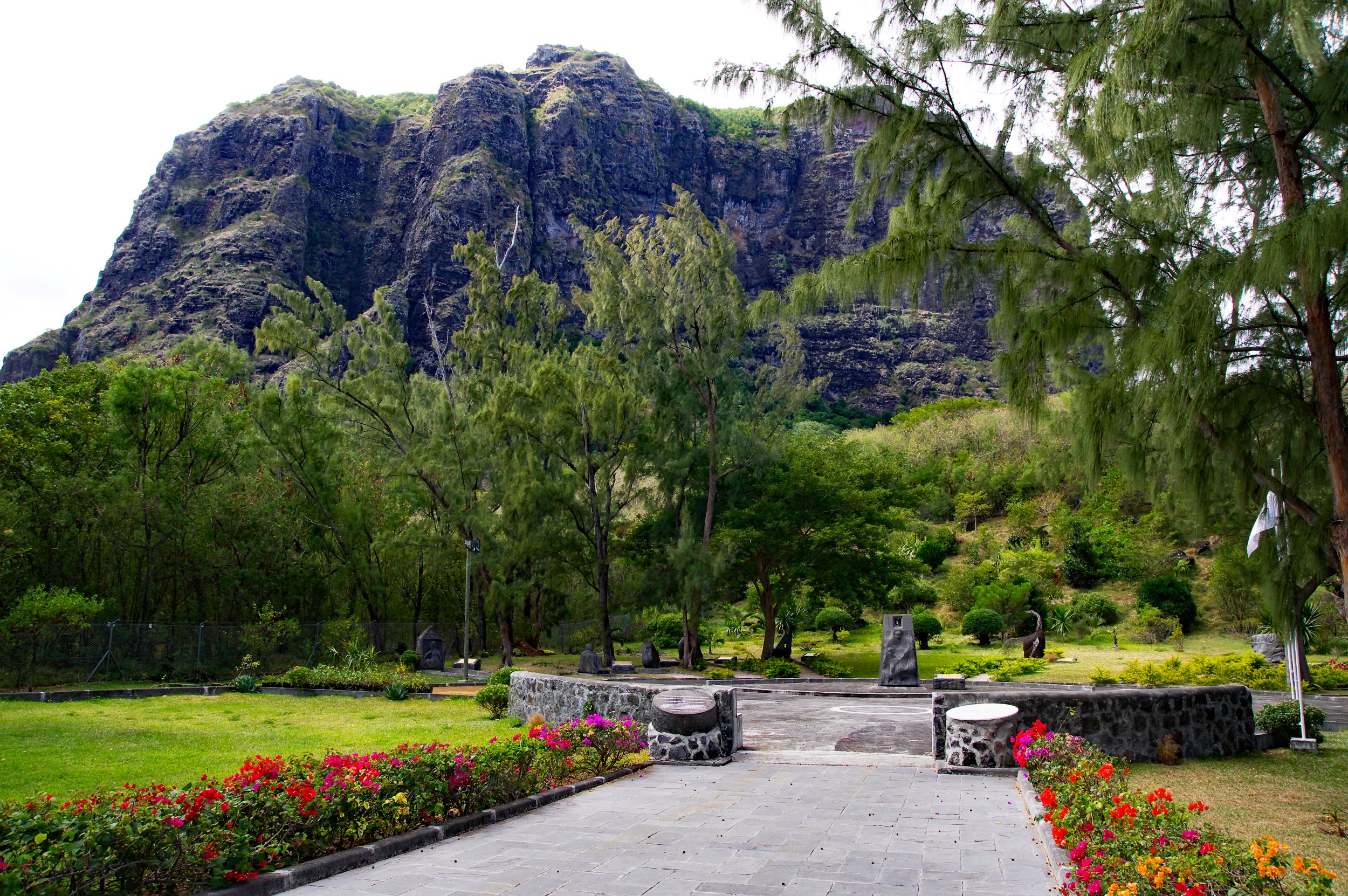
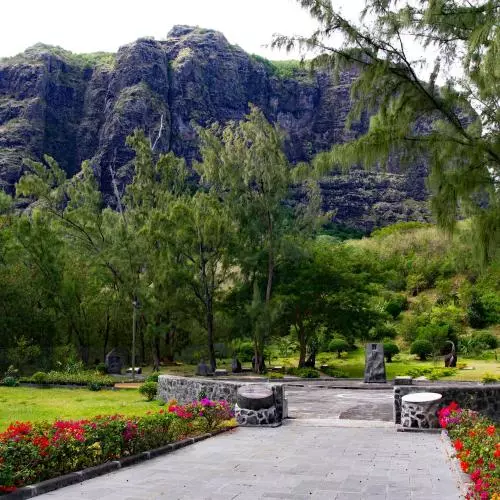
Slave route monument in Mauritius
Photo credit: gadzius / stock.adobe.com
In a historic resolution adopted in March 2026, the UN General Assembly described the trafficking and racialised enslavement of Africans as “the gravest crime against humanity” and called for reparatory justice. Long-standing work by the Caribbean Community (Caricom) and the African Union was essential in placing reparations on the international agenda. But how do descendants of enslaved people put the issue on the agenda at home?
Mauritius is a crucial case for answering this question. Between 2009 and 2011, its Truth and Justice Commission investigated the consequences of slavery and indentured labour from 1638 to the present. Yet, the country was an unlikely candidate for such a policy, as Mauritian Creoles, a community largely descended from enslaved people, remain economically and politically marginalised on the island.
A marginalised minority
Tens of thousands of enslaved people were brought to Mauritius by successive Dutch, French and British colonisers to work on plantations. Forcibly uprooted from their families, lands and cultures, they endured forced labour, violence and malnourishment. The British Slavery Abolition Act was passed in 1833. Enslaved people in Mauritius were legally emancipated on 1 February 1835, but many were required to keep working under an apprenticeship system, which ended on 31 March 1839. One and a half centuries later, their descendants remained exposed to poverty, police brutality, land dispossession and cultural alienation.
Mauritius’s multi-ethnic party system, in which all major parties claim to speak for all communities, made the Creoles’ position harder, as they had to seek representation through multi-ethnic parties in which they were often marginalised. Creole representation was frequently tokenistic: although Creoles were elected on multi-ethnic party lists, they tended to adopt the language of national unity (“Mauricianisme”) and refrain from voicing the grievances of their own community. The word “Creole” itself became taboo, and the constitution folded Creoles together with the descendants of slave owners into the category “General Population”.
Calls for reparations
In 1993, the Creole priest Roger Cerveaux denounced the marginalisation of Creoles within the Catholic Church in a speech that sparked widespread controversy about the “Creole uneasiness” (“malaise créole”). A movement of consciousness-raising and cultural revival followed, in which priests, journalists, historians, musicians and new Creole organisations turned diffuse discontent into a list of demands, at the forefront of which lay the call for financial reparations.
This movement was relayed in the political arena by Les Verts Fraternels, an ecologist party that had emerged from a Creole civil society organisation, the Organisation Fraternelle. A marginal party that won seats only in alliance with larger parties, and whose candidates have polled under 1 per cent of the vote when standing alone, the Verts Fraternels had to deploy savvy political manoeuvring to rally mainstream multi-ethnic parties behind its reparations agenda. To do so, it could leverage certain features of the multi-ethnic party system.
First, because no party can win an election alone, mainstream parties needed Creole votes, and the Verts Fraternels could mobilise them. The party’s strength was on display in April 2000, when 20,000 people attended the party’s annual congress. Shortly afterwards, the Militant Socialist Movement (MSM), a Hindu-dominated multi-ethnic party, approached the Verts Fraternels’ leader, Sylvio Michel, to form a coalition. The deal made him Minister of Fisheries in the government formed by the MSM and the Mauritian Militant Movement (MMM) from 2000 to 2005. It also included an electoral pledge to provide reparations.
Second, because both government and opposition parties were multi-ethnic and courted Creole votes, the Verts Fraternels could credibly threaten to change sides. When the MSM-MMM government proved unwilling to keep its promise of reparations, the Verts Fraternels switched sides and joined the Social Alliance led by the Labour Party (2005–2010). Throughout, they also relied on street mobilisation and on support from opposition MPs to pressure the governments they belonged to.
Forging a majority
To win the support of a wide range of actors, the demand for reparations had to be translated in several ways. First, it was broadened to cover the descendants of indentured labourers: workers, mostly from India, brought to Mauritius on fixed-term contracts, on a large scale from 1834 onwards, and often under harsh conditions. This translation brought both communities together in a shared history of suffering and colonial exploitation.
The project also shifted from implementing reparations directly to creating a commission. A turning point came through Archbishop Desmond Tutu, whose visit to Mauritius in 2007 (following discussions in 2006) helped persuade Prime Minister Navin Ramgoolam of the merits of a commission following the South African model. As a result of this influence, however, the question of reparations was increasingly overshadowed by that of reconciliation.
So amended, the project became acceptable to all, and parliament adopted the Truth and Justice Commission Bill unanimously in 2008. In a country where the history of slavery had been taboo, the state launched an inquiry into this past, and recommendations for reparations were formulated. The Verts Fraternels celebrated a “revolutionary” bill. Since then, Creoles have made real gains, notably the use of Kreol in education and the Intercontinental Slavery Museum, launched in 2020 and opened to the public in 2023.
Yet financial reparations have stalled. Some of the changes made to the original project explain why: significant as it is, a commission remains a long way from implementing reparations. A 27-day hunger strike by the Verts Fraternels in 2013 did not manage to overcome opposition from the economic actors expected to pay. Many of the commission's recommendations, including on land, are yet to be implemented. In 2018, a UN committee found that Creoles still faced de facto discrimination in all walks of life.
Lessons for the reparations movement
First, the case shows that the work of local actors is essential in placing reparations on the political agenda. Without taking into consideration activists and journalists, clergymen and musicians, party organisers and historians, it would be impossible to understand how the Truth and Justice Commission came to be.
Second, local mobilisation by descendants of enslaved people can advance international claims for reparations, but tensions between national and international agendas can also emerge. In 2002, the government attempted to fulfil its national reparations pledge by supporting international efforts to obtain compensation from former colonisers. While less controversial at home, this approach was also seen as a way to derail efforts to obtain reparations locally.
Finally, the Creoles’ campaign for reparations shows that progress is possible through collaboration rather than confrontation. Yet gains remain fragile, and maintaining momentum demands sustained mobilisation. Creole activists have always seen their struggle as a long-term endeavour, stretching over decades. On 23 October 2026, the Mauritian government set up a new inter-ministerial committee to oversee the implementation of the Truth and Justice Commission’s recommendations. The story is not over.
This piece draws on the authors’ open-access article “Practicing Minority Representation in Multi-Ethnic Party Systems: The Politics of Reparations for Slavery in Mauritius”, published in the Swiss Political Science Review (2026), which traces the campaign through press archives from 1993 to 2008 and interviews with activists, politicians, church leaders and commissioners.
Alexandre Wadih Raffoul is a Lecturer at the Swedish Defence University. Sheetal Sheena Sookrajowa is a Senior Lecturer at the University of Mauritius.